
Flagsmith
Open source feature flags and remote config, self-hosted
Replaces Launchdarkly, Split, Statsig
Who it's for
Flagsmith helps teams release features gradually, target cohorts, and turn off risky changes without redeploying.
Choose a managed flag service if no one can operate a highly available flag backend.
Teams can adjust application behavior for environments, segments, or customer groups through remote config.
Skip it if you need deep experimentation statistics and warehouse-native metric analysis as the main requirement.
The problem
Shipping every feature as an all-or-nothing release increases risk. Without feature flags, teams need emergency rollbacks, branch gymnastics, or redeploys just to disable a broken feature for one segment. Managed flag services solve rollout control, but they can become expensive and central to production availability. Teams that want cost and data control may prefer a self-hosted flag service.
How it works
Flagsmith supports flag-controlled releases and remote configuration, letting teams change behavior without deploying new code.
Teams can target users or segments for gradual rollouts, experiments, or environment-specific behavior.
Flagsmith describes on-premise and private cloud hosting, giving teams control over flag infrastructure and data paths.
The GitHub repository reports BSD-3-Clause licensing for the API repository.
Features
- Feature flags and remote config
- Segmentation and targeting
- Self-hosted flag service
- BSD-3-Clause license
Recommended for this setup
Strengths
- Reduces release risk: Flags let teams ship code separately from releasing features, which makes staged rollouts and quick disables easier.
- Open alternative to managed flag vendors: Teams can inspect and self-host the core service instead of putting production feature control entirely behind a proprietary vendor.
- Useful for product and engineering alignment: Remote config and targeting let product teams control exposure while engineering keeps deployment cadence steady.
Trade-offs
- Flag service reliability becomes production-critical: If apps depend on remote flag decisions, the Flagsmith deployment needs high availability, caching strategy, monitoring, and incident planning.
- Experiment analytics may need pairing: Flagsmith handles rollout and config, but teams should verify whether its analytics depth matches dedicated experimentation tools for their use case.
Tech stack
FAQ
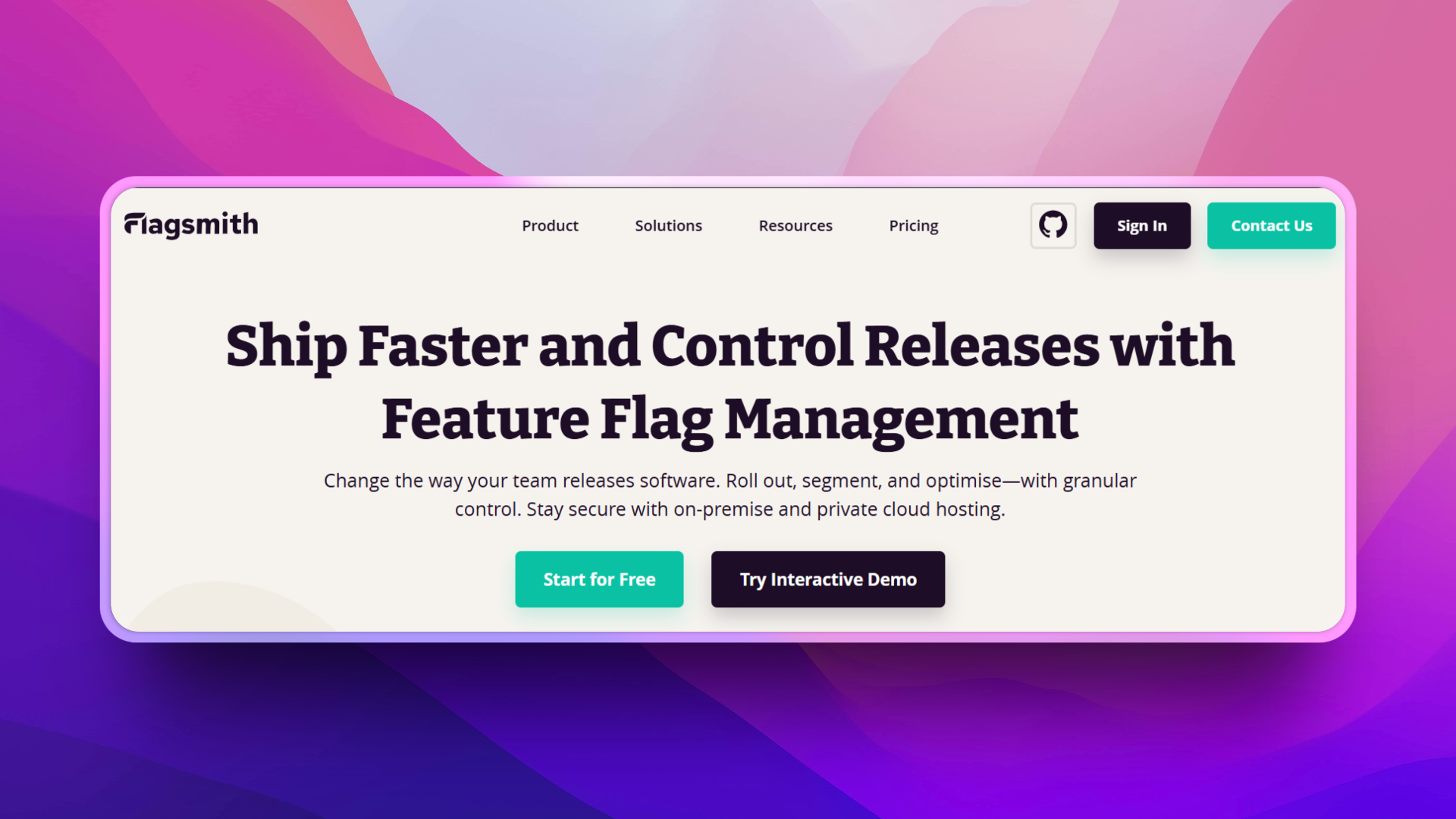
Flagsmith provides feature flags and remote configuration so teams can control rollouts and target application behavior.
Yes. Flagsmith describes on-premise and private cloud hosting and positions the project as an open-source alternative to managed feature flag vendors.
The Flagsmith API repository reports BSD-3-Clause licensing.