
GrowthBook
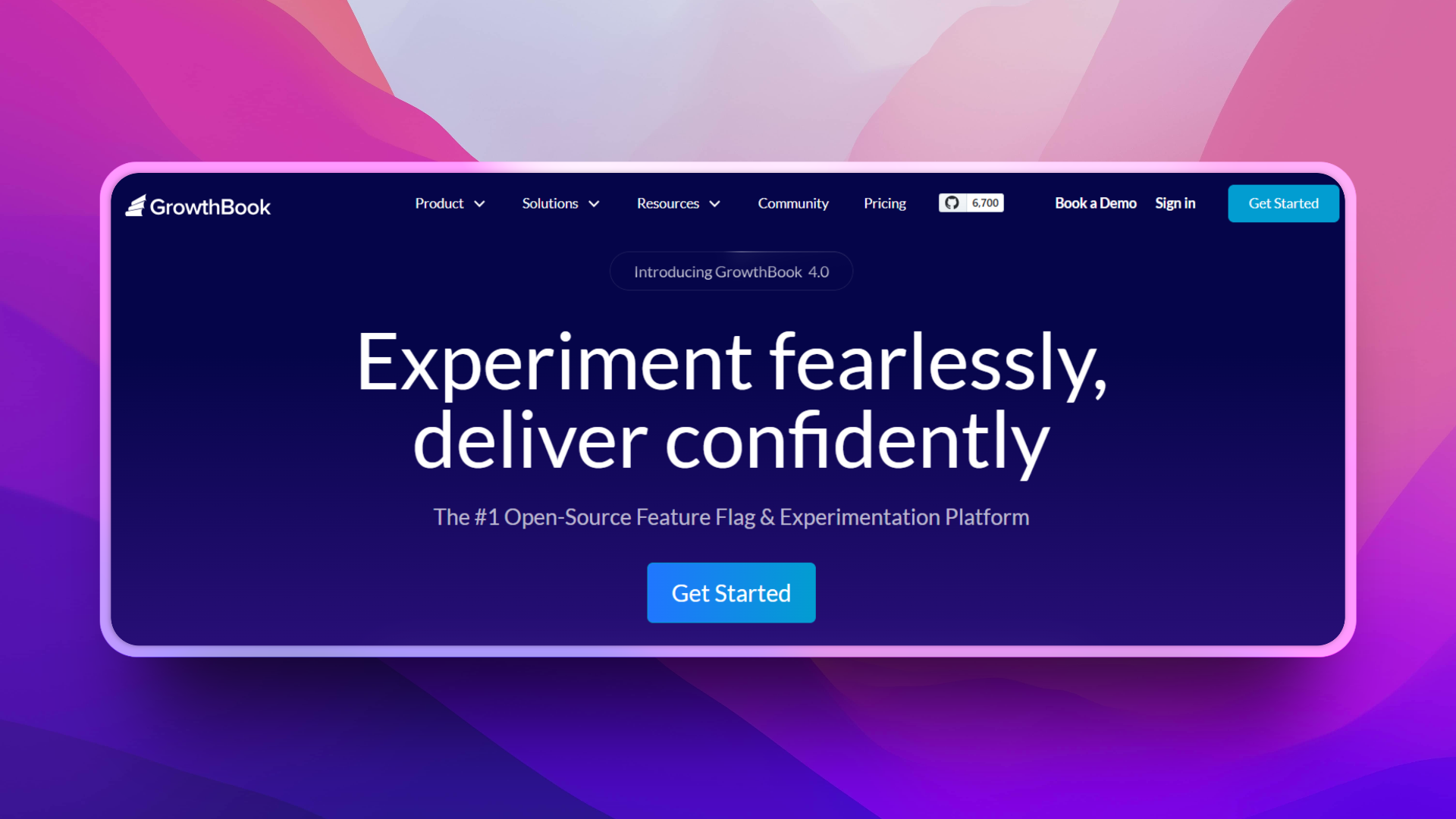
Open source A/B testing and feature flag platform
Replaces Launchdarkly, Optimizely, Statsig
Who it's for
GrowthBook lets teams define metrics against their existing data warehouse and connect those results to feature flag rollouts.
Skip it if your team has no event pipeline or wants a fully managed analytics suite with minimal SQL involvement.
Teams can self-host flag infrastructure, use SDKs across services, and automate workflows through APIs and webhooks.
Choose a managed flag vendor if uptime responsibility and SDK support should sit fully with an external provider.
The problem
Feature delivery and experimentation often split across multiple paid tools: one for flags, one for A/B tests, one for analytics, and another for data warehouse analysis. That fragmentation makes it harder to connect releases to product impact, and per-seat or event-based pricing can punish teams as usage grows. Teams with strong data infrastructure also need experimentation logic that respects their metric definitions. If metrics live in a warehouse, exporting data into a vendor dashboard creates governance and accuracy problems.
How it works
GrowthBook supports advanced targeting, gradual rollouts, and experiments, so teams can release changes to segments before full production exposure.
The README lists 24 SDKs, including React, Python, Android, and iOS, which helps teams run consistent flags across web, backend, and mobile surfaces.
GrowthBook queries 11 data sources, including BigQuery, Snowflake, Databricks, Redshift, and ClickHouse, so experiment analysis can use existing warehouse data.
GrowthBook documents CUPED, sequential testing, Bayesian methods, post-stratification, bandits, and SRM checks for teams that need more than basic conversion-rate comparisons.
Built-in analytics, webhooks, and a REST API let teams build dashboards and automate flag workflows around the same experimentation data.
Features
- Feature flags with targeting
- 24 SDKs
- Warehouse-native experiments
- Advanced statistics engine
- Product analytics and API access
How to install
Self-host GrowthBook with Docker Compose when the team wants a local evaluation path or a private deployment.
git clone https://github.com/growthbook/growthbook.git
cd growthbook
docker compose up -d
Recommended for this setup
Strengths
- Flags and experiments in one workflow: GrowthBook connects rollout control to measurement, so product teams can test a feature and analyze impact without moving between unrelated vendors.
- Works with existing warehouses: Warehouse-native analysis is a strong fit for teams that already govern metrics in BigQuery, Snowflake, Redshift, Databricks, or ClickHouse.
- Self-hosting path is documented: The README gives a Docker Compose quick start, which makes local evaluation and self-hosted deployment easier to validate than API-only experimentation tools.
Trade-offs
- Open-core licensing: GrowthBook says the bulk of the code is MIT licensed, but some directories use a separate commercial enterprise license. Teams need to check whether required features sit in the open or enterprise tier.
- Data warehouse setup affects value: GrowthBook is strongest when metrics already live in a supported data source. Teams without clean event tracking or SQL-owned metrics will need data work before experiments are useful.
Tech stack
FAQ
Yes. The README includes a Docker Compose quick start and links to full self-hosting instructions.
No. GrowthBook combines feature flags, experimentation, product analytics, metric definitions, APIs, and warehouse-native analysis.
GrowthBook is open core. The project states that most code is MIT licensed, with separate commercial licensing for some enterprise directories.