
Tunnelmole
Get a public HTTPS URL for your local development server
Replaces Ngrok, Localxpose, Cloudflare Tunnel
Who it's for
Use Tunnelmole when Stripe, GitHub, Slack, or another external service needs to call your local endpoint.
The endpoint is production-facing or needs long-term uptime guarantees.
Use Tunnelmole to give a teammate or client a temporary URL for a local app without deploying a preview environment.
Your team already has secure preview deployments attached to every branch.
The problem
Local development breaks down when an external service needs to reach your machine. Webhook providers, mobile devices, teammates, and clients cannot access localhost, so developers either deploy unfinished work or fight with network configuration. Hosted tunnel tools solve the access problem, but they add account, pricing, and vendor dependency concerns. Some teams want a simpler open source path for temporary public URLs.
How it works
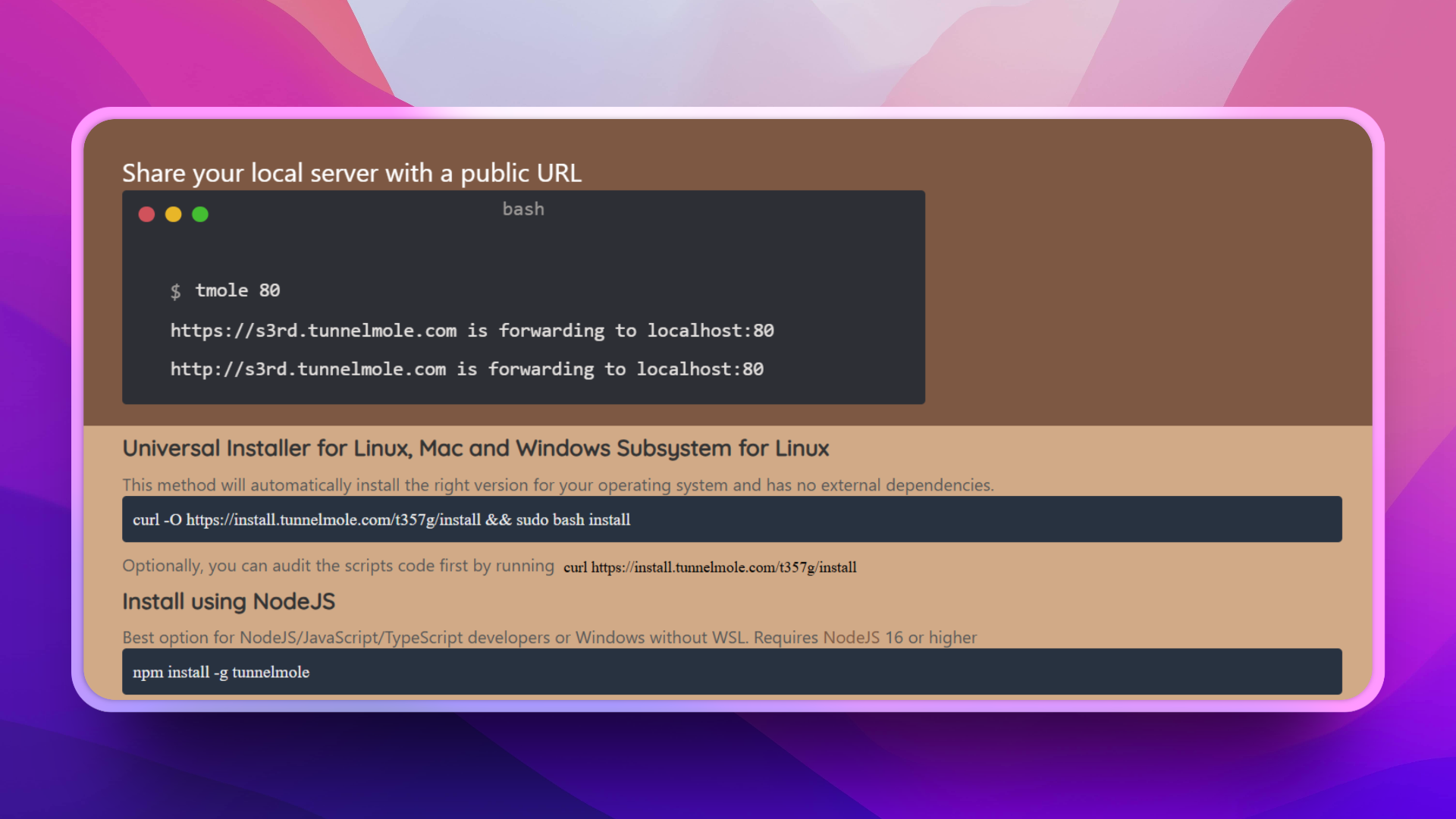
Creates a public URL for locally running HTTP or HTTPS servers, including web servers, APIs, Docker containers, and React or Node apps.
Lets services such as payment providers or automation tools call a local endpoint during development without deploying the app.
Provides a client-side tunnel workflow with source access, giving developers more inspection and self-hosting options than a closed tunnel service.
Features
- Public URLs for localhost
- Webhook testing workflow
- Open source tunneling client
Recommended for this setup
Strengths
- Fast path from localhost to public URL: Tunnelmole focuses on the core developer job: expose a local server so another system can reach it. That keeps demos and webhook tests simple.
- Useful before deployment: Developers can share work or test callbacks before CI/CD, staging infrastructure, or DNS setup is ready.
Trade-offs
- Temporary tunnel, not production ingress: Tunnelmole is for development access and demos. Production workloads need stable ingress, authentication, rate limits, observability, and operational ownership.
Tech stack
FAQ
Tunnelmole is used to expose local HTTP or HTTPS servers through a public URL for development, demos, and webhook testing.
Yes. Tunnelmole can replace ngrok for common local tunneling jobs, especially when developers want an open source client.
No. Tunnelmole is best for temporary development tunnels. Production services need stable ingress and security controls.