
Modelence
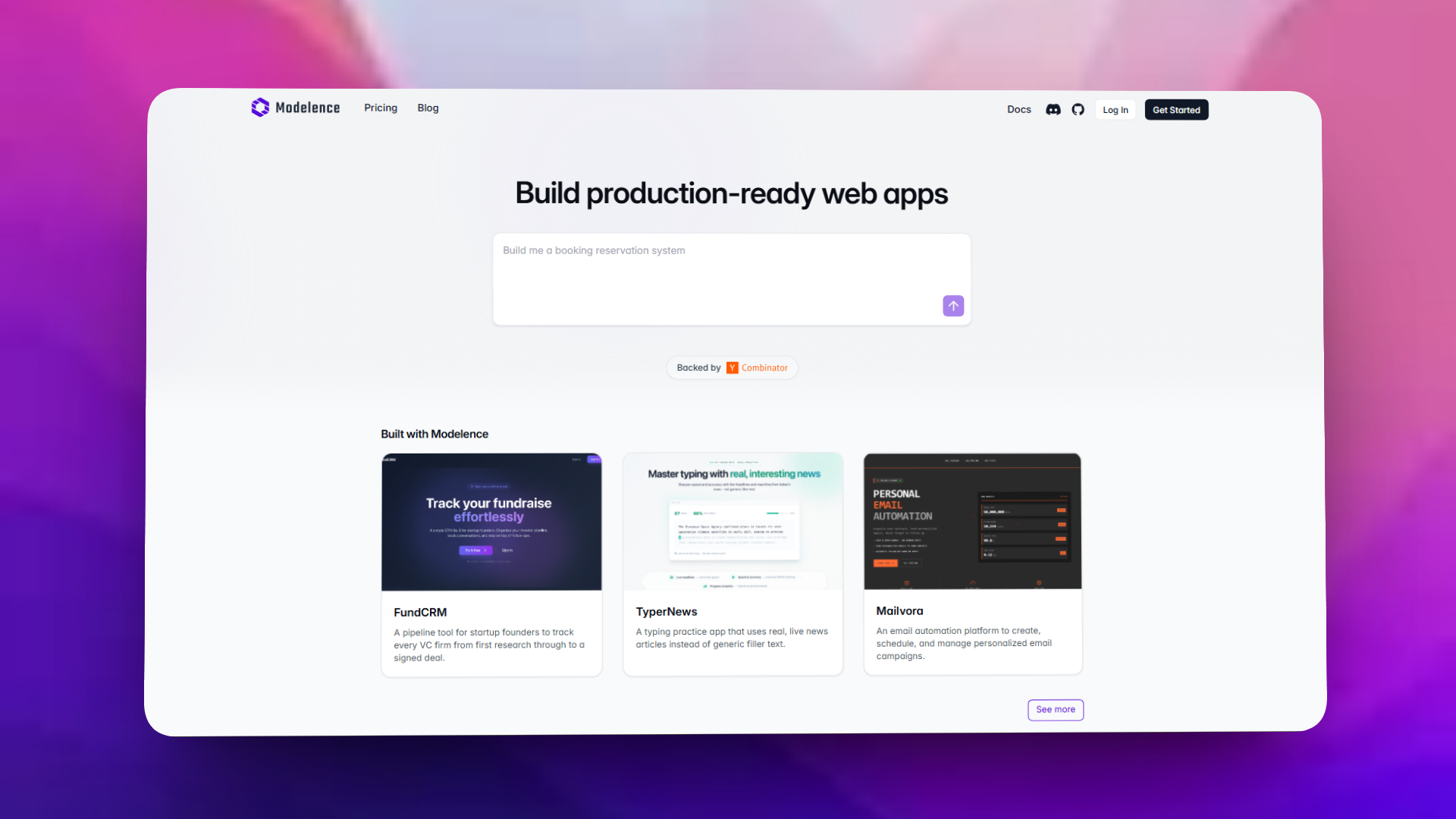
Full-stack framework for building production-ready web apps
Replaces Firebase, Aws Amplify, Outsystems
Who it's for
Modelence fits founders who want a source-visible framework covering common backend and web app pieces.
You already have a mature framework stack and only need one missing library.
The project belongs on a shortlist when evaluating opinionated full-stack web frameworks.
You need a battle-tested enterprise framework with long-term vendor support.
The problem
Early web products often spend too much time on plumbing: authentication, data models, APIs, admin flows, deployment, and hosting choices. Every separate library or service adds integration work before the product has real users. A framework can reduce that setup burden, but only if teams understand what it owns and where it constrains architecture. Developers need a clear stack choice, not a vague promise of faster app building.
How it works
Modelence is positioned across web development, backend development, authentication, database, and API development.
The tag set suggests a framework aimed at deployable web products rather than isolated UI components.
Modelence is relevant for teams evaluating source-visible alternatives to hosted app-builder platforms.
Features
- Full-stack framework positioning
- Cloud-native app focus
- Developer-owned application stack
Recommended for this setup
Strengths
- Reduces early stack decisions: Modelence is most useful when a team wants one framework to cover common application infrastructure choices.
- Good founder prototype fit: The combined web, backend, and hosting context can appeal to small teams trying to move from idea to working app quickly.
Trade-offs
- Framework lock-in needs review: Before adoption, teams should verify routing, data, auth, deployment, license, and escape-hatch details from current documentation.
Tech stack
FAQ
Modelence should be evaluated as a full-stack web application framework covering backend and developer workflow concerns.
Authentication appears to be part of the Modelence evaluation scope, but teams should verify the exact auth model in current upstream documentation before adoption.
Confirm license, deployment model, database assumptions, authentication boundaries, and production-readiness from official docs.