
CloudQuery
Sync cloud assets from 150+ providers into your own SQL database
Replaces Wiz, Flexera, Orca Security
Who it's for
CloudQuery helps security teams centralize cloud asset data for compliance checks, ownership review, and misconfiguration analysis.
Choose a managed CSPM if you need out-of-the-box policies, remediation workflows, and executive dashboards.
Platform teams can sync cloud resources into a database and combine them with internal ownership or cost data.
Skip it if no one will maintain provider credentials, sync jobs, schemas, and SQL reporting.
The problem
Cloud inventory gets scattered across consoles, accounts, regions, SaaS tools, and exported reports. Security and compliance teams need to answer basic questions about assets, misconfigurations, owners, and costs, but the source data lives behind many APIs. A closed cloud posture product can help, but it often hides the raw data and query layer. Teams that already use SQL and data warehouses may want inventory data in their own systems.
How it works
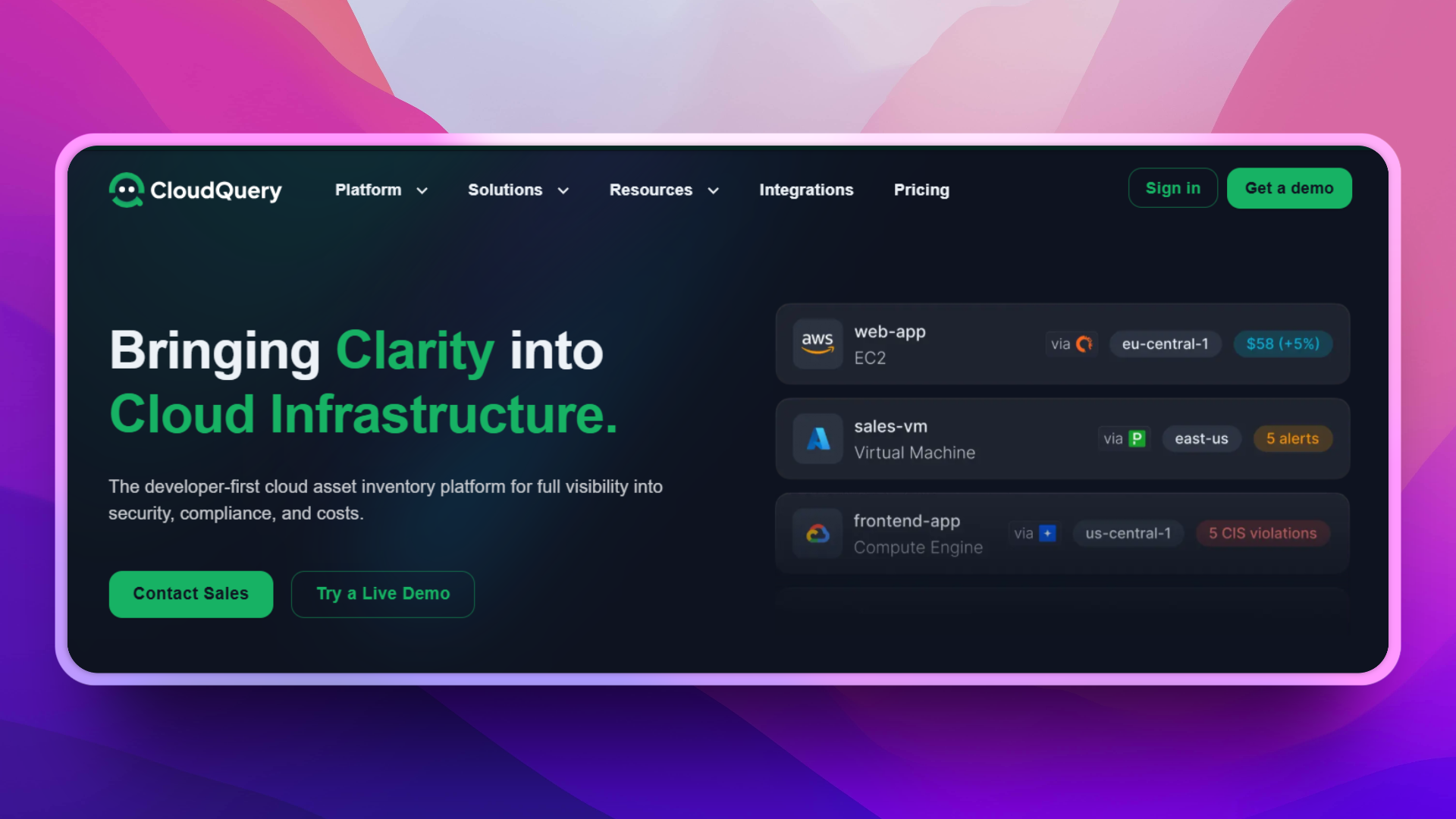
CloudQuery syncs asset data from cloud and SaaS providers into destinations where teams can query it directly.
The README describes AWS, Azure, GCP, and 70-plus cloud and SaaS sources, giving teams a wide starting point for infrastructure inventory.
Teams can analyze assets, compliance, and cost questions with their own SQL workflows instead of only using a vendor UI.
The GitHub repository reports MPL-2.0 licensing, which is a file-level copyleft license teams should understand before modifying code.
Features
- Provider-to-database sync
- Broad provider coverage
- SQL-first inventory analysis
- MPL-2.0 license
Recommended for this setup
Strengths
- Own the inventory data: CloudQuery puts cloud asset data in infrastructure the team controls, which helps with audits, custom reporting, and data retention.
- Fits existing analytics workflows: Security and platform teams can use SQL, BI tools, and warehouse workflows they already know.
- Useful before buying a full CSPM suite: Teams can answer many cloud inventory and compliance questions from raw synced data before committing to a proprietary posture product.
Trade-offs
- You build the analysis layer: CloudQuery syncs data, but teams still need to write queries, dashboards, alerts, and policies for their specific risks.
- Provider coverage needs validation: Broad provider counts are useful, but each team should verify the exact services, fields, and sync behavior needed for its accounts.
Tech stack
FAQ
CloudQuery syncs cloud and SaaS asset data from providers into databases so teams can query their own infrastructure inventory.
No. CloudQuery supports multiple providers, with the README naming AWS, Azure, GCP, and 70-plus cloud and SaaS sources.
It can replace some inventory and query workflows, but teams still need to build policies, dashboards, and remediation processes.