
Better Auth
Drop-in TypeScript auth with MFA, SSO, and multi-tenancy support
Replaces Clerk, Auth0, Okta, Firebase Authentication
Who it's for
Use Better Auth when a Next.js or full-stack TypeScript app needs customer login, OAuth, sessions, and extensibility without per-user hosted auth lock-in.
Skip it if you need enterprise workforce SSO, device management, lifecycle governance, or compliance packages from an identity vendor.
Use Better Auth when multiple TypeScript apps need a shared approach to auth behavior and database-backed sessions.
Skip it if your organization does not have engineering capacity to own authentication code safely.
The problem
Hosted auth is convenient until the application needs behavior the vendor pricing tier, data model, or extension system does not support. Teams building TypeScript apps often want login, sessions, OAuth, organizations, and two-factor flows without sending every identity decision through a black-box service. The risk is ownership. Authentication touches user data, security policy, account recovery, and product onboarding. When it lives outside the app, customization can become expensive and migration can become risky.
How it works
Better Auth is designed for TypeScript application stacks, so auth logic can live alongside the app code and types. That helps teams keep login behavior reviewable instead of pushing every change into a vendor dashboard.
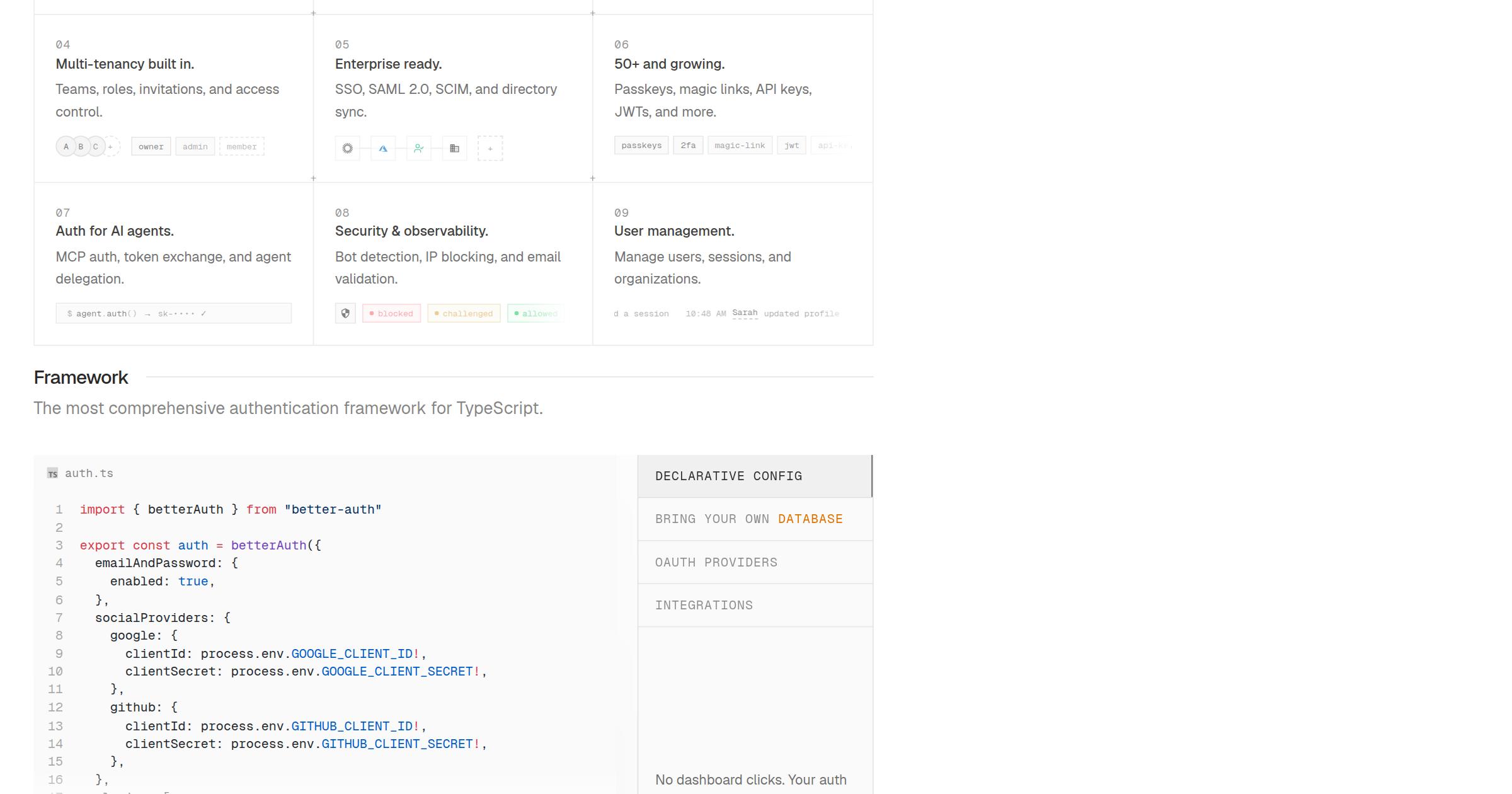
Add capabilities such as OAuth, two-factor auth, organizations, and other auth flows through plugins. The plugin model lets teams start with core login and expand as product requirements mature.
Teams can keep users, sessions, and related auth state closer to their own database and application logic. That is the main difference from using a hosted auth service as the system of record.
Features
- TypeScript-native auth API
- Plugin-based auth features
- Own your auth data model
Recommended for this setup
Strengths
- Better fit for app auth than enterprise IAM: Better Auth is strongest for product authentication inside TypeScript apps. That is narrower than Okta, but it is exactly the right scope for teams that need customer login instead of workforce identity governance.
- MIT licensed framework: MIT licensing gives startups and product teams a low-friction base for commercial application auth. Teams can inspect the framework and adapt it without accepting per-user hosted auth pricing by default.
Trade-offs
- Security ownership stays with you: Better Auth gives teams control, but the team still owns secure configuration, account recovery flows, database protection, and updates. Auth0 and Okta reduce that burden with managed infrastructure, enterprise controls, and support.
Tech stack
FAQ
Better Auth can replace Auth0-style customer authentication for TypeScript applications. It should not be positioned as a full replacement for Okta or Microsoft Entra workforce identity suites.
Better Auth is a framework you run inside your own application, not a separate hosted identity server. Your app and database own the runtime behavior.
Better Auth uses MIT. That permissive license supports commercial use, modification, and redistribution with attribution.