
QoreDB
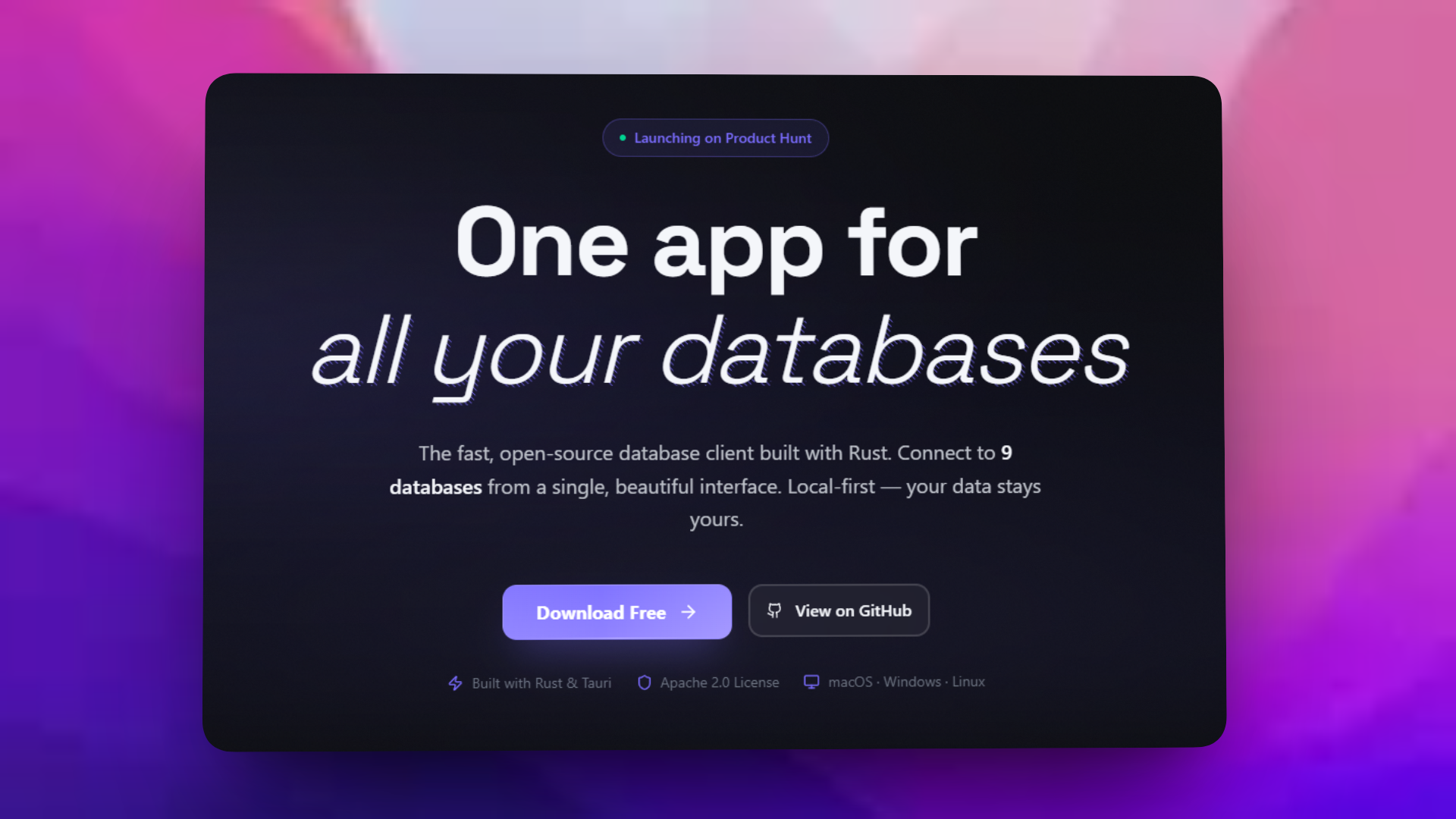
Rust-powered database client for 9 SQL and NoSQL engines
Replaces Datagrip, Navicat Premium, Dbeaver Enterprise
Who it's for
QoreDB fits teams that frequently inspect data across several database engines while building and debugging features.
Your team has standardized on one database and one mature admin client.
Developers can use QoreDB to inspect local and remote development data without opening multiple tools.
You need a browser-only database admin tool for non-technical users.
The problem
Developers rarely work with only one database anymore. A product stack might include PostgreSQL, Redis, MongoDB, SQLite, and local test databases, each with a different client, connection model, and interface. That tool sprawl slows debugging and increases the risk of mistakes when switching between environments. QoreDB aims to consolidate database access into one fast local client while keeping connections and sessions under developer control.
How it works
QoreDB is designed to connect to several SQL and NoSQL databases from one local app.
The project emphasizes a local client experience, which helps developers inspect data without relying on a hosted admin panel.
Keeping database connections in one interface reduces context switching across separate tools.
Features
- Multi-database client
- Fast local workflow
- Unified connection management
Recommended for this setup
Strengths
- Good fit for polyglot stacks: QoreDB is strongest when teams need to inspect multiple database engines during feature work and debugging.
- Open desktop alternative: The open-source client model gives developers more transparency than proprietary database GUI tools.
Trade-offs
- Engine coverage needs validation: Teams should verify the specific databases, authentication methods, and advanced features they use before replacing existing database clients.
Tech stack
FAQ
QoreDB is an open-source database client for working with multiple SQL and NoSQL databases from one local app.
QoreDB is for developers and teams that inspect several database engines during everyday engineering work.
It may replace several tools for common inspection workflows, but teams should test support for their exact engines and advanced features.